Home » IoT Networking: MQTT, CoAP, LoRaWAN, Zigbee, Thread และ IoT Security
IoT Networking: MQTT, CoAP, LoRaWAN, Zigbee, Thread และ IoT Security
IoT Networking: MQTT, CoAP, LoRaWAN, Zigbee, Thread และ IoT Security
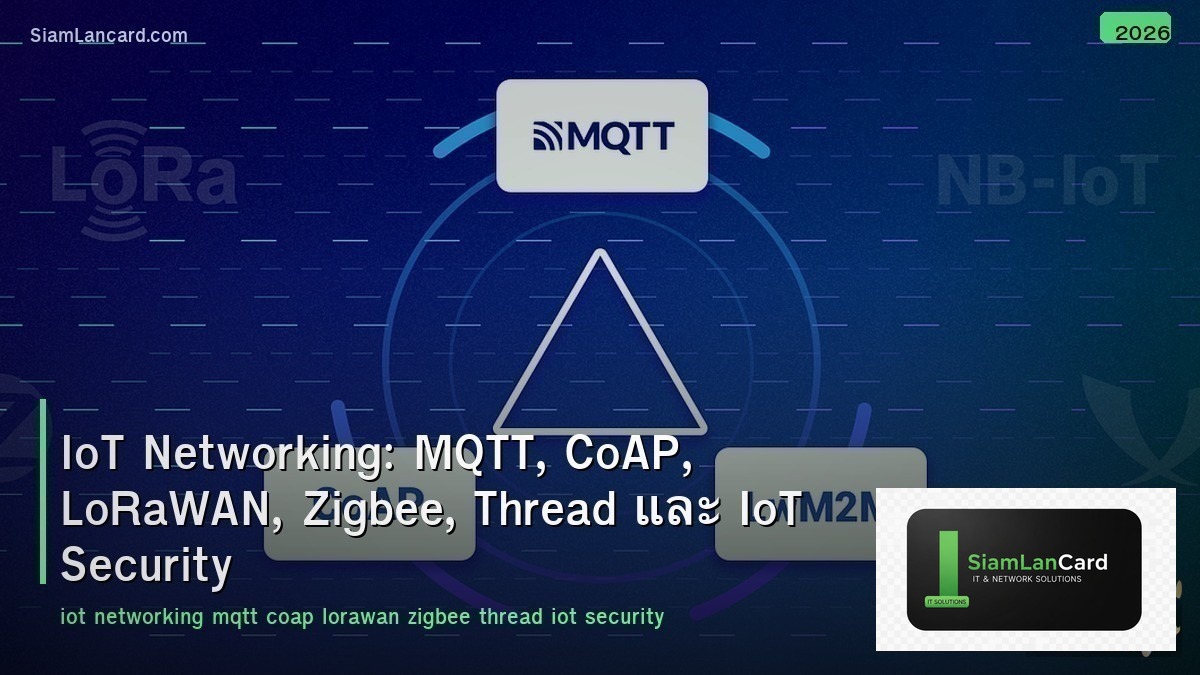
IoT Networking เชื่อมต่อ billions ของ devices ที่มี resource จำกัดเข้ากับ internet MQTT เป็น lightweight messaging protocol สำหรับ publish/subscribe, CoAP เป็น RESTful protocol สำหรับ constrained devices, LoRaWAN ให้ long-range low-power connectivity, Zigbee เป็น mesh network สำหรับ smart home, Thread เป็น IP-based mesh protocol ที่ออกแบบมาสำหรับ smart home และ IoT Security ปกป้อง devices ที่มักมี security ต่ำ
ภายในปี 2030 คาดว่าจะมี IoT devices มากกว่า 30 billion เครื่อง เชื่อมต่อ internet แต่ IoT devices มักมี CPU อ่อน, memory น้อย, battery จำกัด — ไม่สามารถใช้ HTTP/TLS แบบปกติได้ ต้องมี protocols ที่ออกแบบมาสำหรับ constrained environments IoT security เป็น challenge ใหญ่: devices มี default passwords, ไม่ได้ patch, เป็น botnet targets (Mirai)
IoT Protocol Stack
| Layer |
Protocol |
Use Case |
| Application |
MQTT, CoAP, HTTP, AMQP |
Data exchange ระหว่าง devices กับ cloud/server |
| Transport |
TCP, UDP, DTLS |
Reliable (TCP) vs lightweight (UDP) transport |
| Network |
IPv6, 6LoWPAN, RPL |
IP addressing สำหรับ constrained networks |
| Data Link/PHY |
Wi-Fi, BLE, Zigbee, Thread, LoRa, NB-IoT, LTE-M |
Wireless connectivity (range vs power vs bandwidth) |
MQTT (Message Queuing Telemetry Transport)
| Feature |
รายละเอียด |
| คืออะไร |
Lightweight publish/subscribe messaging protocol (TCP-based) |
| Architecture |
Publisher → Broker → Subscriber (decoupled communication) |
| QoS Levels |
QoS 0 (at most once), QoS 1 (at least once), QoS 2 (exactly once) |
| Topics |
Hierarchical topic structure: home/living-room/temperature |
| Retained Messages |
Broker เก็บ last message → new subscriber ได้ทันที |
| Last Will |
ถ้า client disconnect unexpectedly → broker publish “last will” message |
| Brokers |
Mosquitto (open source), HiveMQ (enterprise), AWS IoT Core, Azure IoT Hub |
| Overhead |
Minimum 2 bytes header (vs HTTP hundreds of bytes) |
CoAP (Constrained Application Protocol)
| Feature |
รายละเอียด |
| คืออะไร |
RESTful protocol สำหรับ constrained devices (UDP-based, like HTTP for IoT) |
| Methods |
GET, POST, PUT, DELETE (เหมือน HTTP REST) |
| UDP-Based |
ใช้ UDP (ไม่ใช่ TCP) → lower overhead, faster สำหรับ constrained devices |
| Observe |
Subscribe to resource changes (like MQTT subscribe แต่ RESTful) |
| Block Transfer |
Transfer large payloads ใน small blocks (สำหรับ constrained memory) |
| DTLS |
Security ผ่าน DTLS (Datagram TLS — TLS over UDP) |
| vs MQTT |
CoAP = request/response (REST) | MQTT = publish/subscribe (event-driven) |
LoRaWAN
| Feature |
รายละเอียด |
| คืออะไร |
Long Range Wide Area Network — LPWAN สำหรับ IoT (km range, years battery) |
| Range |
2-15 km (urban), up to 50 km (rural, line of sight) |
| Bandwidth |
ต่ำ: 0.3-50 kbps (เหมาะ sensor data, ไม่เหมาะ video/audio) |
| Battery |
5-10 ปี บน AA batteries (ultra low power) |
| Architecture |
End devices → Gateways → Network Server → Application Server |
| Classes |
Class A (lowest power), Class B (scheduled receive), Class C (always listening) |
| Use Cases |
Smart agriculture, water meters, air quality, asset tracking, smart city |
| Providers |
The Things Network (free), Helium, Actility, AWS IoT Core for LoRaWAN |
Zigbee vs Thread vs Matter
| Feature |
Zigbee |
Thread |
Matter |
| Type |
Mesh network protocol |
IP-based mesh protocol |
Application layer (runs over Thread, Wi-Fi, Ethernet) |
| IP-Based |
ไม่ (ต้อง bridge ไป IP) |
ใช่ (IPv6 native) |
ใช่ (IP-based) |
| Range |
10-100m per hop |
10-100m per hop |
Depends on transport |
| Mesh |
Yes (self-healing) |
Yes (self-healing, no single point of failure) |
N/A (transport layer handles) |
| Power |
Low (battery devices) |
Low (sleepy end devices) |
Depends on transport |
| Interoperability |
ต่ำ (vendor-specific profiles) |
ดี (IP-based) |
สูงสุด (Apple, Google, Amazon, Samsung unified) |
| Smart Home |
Philips Hue, Samsung SmartThings |
Apple HomePod, Google Nest |
Unified smart home standard |
LPWAN Comparison
| Technology |
Range |
Bandwidth |
Power |
Cost |
| LoRaWAN |
2-15 km |
0.3-50 kbps |
Very low |
Low (unlicensed spectrum) |
| NB-IoT |
1-10 km |
26-127 kbps |
Low |
Medium (licensed, SIM required) |
| LTE-M |
1-10 km |
375 kbps-1 Mbps |
Medium |
Medium (licensed, higher bandwidth) |
| Sigfox |
3-50 km |
100-600 bps |
Very low |
Low (very limited bandwidth) |
IoT Security
| Threat |
Attack |
Defense |
| Default Credentials |
Mirai botnet (scan for default passwords → DDoS) |
Change default passwords, disable unnecessary services |
| Unencrypted Communication |
Sniff sensor data, inject commands |
TLS/DTLS, MQTT over TLS, encrypted LoRaWAN |
| No Updates |
Known vulnerabilities never patched |
OTA (Over-The-Air) firmware updates, secure boot |
| Physical Access |
Extract firmware, clone device, tamper sensors |
Secure boot, hardware security (TPM), tamper detection |
| Lateral Movement |
Compromised IoT device → pivot to corporate network |
Network segmentation (IoT VLAN isolated), NAC |
| Supply Chain |
Backdoor ใน firmware/hardware จาก manufacturer |
Vendor assessment, firmware verification, SBOM |
ทิ้งท้าย: IoT Networking = Connecting Billions of Things
IoT Networking MQTT: pub/sub messaging (TCP), QoS 0/1/2, lightweight (2-byte header), Mosquitto/HiveMQ CoAP: RESTful for constrained devices (UDP), GET/POST/PUT/DELETE, DTLS security LoRaWAN: long range (2-15km), low power (5-10yr battery), low bandwidth (sensor data) Zigbee: mesh network, smart home, not IP-based (needs bridge) Thread: IP-based mesh (IPv6), smart home, self-healing, Matter compatible Matter: unified smart home standard (Apple + Google + Amazon + Samsung) Security: change defaults, encrypt (TLS/DTLS), OTA updates, segment IoT network, secure boot Key: choose protocol based on range, power, bandwidth, IP requirements — always prioritize security
อ่านเพิ่มเติมเกี่ยวกับ Network Segmentation VLANs VRF Microsegmentation และ Wireless Security WPA3 SAE OWE ที่ siamlancard.com หรือจาก icafeforex.com และ siam2r.com